
*The Spring 2024 Field Building Grant Cycle is now closed. Applications are currently being considered for the Fall 2024 Capacity Building Grant Cycle. Learn more and apply now.*
Background
SRE is a network of over 175 Jewish organizations that is rooted in our shared commitment to safety, respect, and equity for all.
Our work is focused in these two areas: 1) Gender-focused efforts to address harassment and inequity, that include women as a primary target beneficiary population; and 2) Broader safety, respect, and equity (s,r,e) culture change efforts that support safety, respect and equity for all (i.e. impact multiple segments and identities).
SRE Network serves as a multiplier through our community investments portfolio, which encompasses both grantmaking and investments in partnerships with experts, trainers, and practitioners in both the Jewish community and beyond to provide support to SRE Network membership, Jewish workplaces, and the field at large. To date, SRE Network has invested over $6M in grants and supports to advance safety, respect, and equity.
For a comprehensive list of projects SRE has funded, please click here.
Spring 2024 Field Building Grants Process
In spring of 2024, SRE Network awarded a total of $575,000 to twelve SRE member and affiliate projects that build the field of safety, respect, and equity in Jewish communal spaces or workplaces.
Field building is a collective approach to creating a more equitable ecosystem through investment in projects that have the potential for wider ripples of positive impact. Examples of previously funded field-building projects include: community-wide training, cross-denominational ethics review, and collaborative cohort learning.
Eligible Projects:
- Are led by SRE Network Members or Affiliates
- Are focused on one or both of our key funding areas:
- Gender-focused efforts to address harassment and inequity, that include women as a primary beneficiary.
- Broader safety, respect,and equity (s,r,e) culture change efforts that support safety, respect and equity for all; either by a) operating across multiple segments or identities, such as an organization-wide pay equity initiative; or b) focusing on specific segments and identities other than women (e.g. anti-racism, disability access, gender identity), provided the project model has the potential for widespread positive impact across multiple identities, including women. Are focused on one or both of our key funding areas.
- Incorporate a multi-dimensional, intersectional understanding of identity, structural bias, and inequity
- Address in whole or in part one of the safety, respect, equity communal gaps we have identified
- Demonstrated expertise in the project area
- Meet our other eligibility and evaluation criteria
Eligibility Criteria:
To be eligible to submit a letter of intent (LOI) for this funding, an organization must:
- Be located and serve Jewish communities in North America.
- Be a 501(c)3 nonprofit or have a current fiscal sponsor.
- Be a current SRE Network Member or Affiliate, and have maintained engagement status for at least six months.
- Demonstrate availability and readiness of dedicated leadership, staff, and resources to successfully deliver this effort.
*All previous and current SRE grantees and grant applicants were eligible for this funding.
Grantseekers' Workshop
On Thursday, February 8, 2024, SRE hosted a Grantseekers' Workshop for prospective grant applicants to learn more about the process and connect with SRE staff.
Letters of Intent
In order to submit a LOI, organizations were required to have already assessed a field building need in relation to safety, respect, and equity in Jewish workplaces and/or communal spaces, and determined a course of action. Letters of intent were required to include the following:
- Applicant Organization Name
- Contact Name, Title, and Email
- Annual Operating Budget (including fiscal year)
- Total Amount Requested (over 2 years)
- Communal Need: Which of our focus areas is your project designed to address: gender and/or safety, respect, equity for all? Describe the need, and how do you see your initiative playing a part in filling that need?
- How have you assessed or measured the communal need for this specific intervention?
- How will this specific intervention move the needle in one or both of our focus areas? What is your organizational vision for this change?
- How do you incorporate a multidimensional/intersectional understanding of identity in your proposed project?
- Project Outline: How have you determined you will address this need?
- Include an outline of your methodology to address this need, and examples of your organizational track record of success or expertise in this area.
- Key Personnel: Describe the experience and background of your leadership and anyone else who will be actively involved in the project, how they are equipped to understand and address the needs of the community.
- Evaluation: What are your specific short and long term goals of this project or intervention, including the number of people served/impacted and how they will be served?
- Budget: Applicants must outline a full project budget, including how the SRE funds will be allocated. Applicants are welcome, but not required, to use the SRE budget template.
- Proof of Tax Exempt Status: Applicants will need to upload a IRS Determination Letter/proof of 501(c)3 or Fiscal Sponsorship documentation.
✦ The 2024 Spring 2024 Field Building Grant Cycle application deadline has passed. The next grant cycle will take place in fall 2024.
Commitment & Reporting
SRE Network is committed to developing an equitable grants process, and all applications are subject to evaluation through our Grants Review Committee, and a due diligence process through our fiscal sponsor, New Venture Fund (NVF). For organizations that moved forward in the application process, there were total of three rounds of inquiry and evaluation which required their input. SRE Network anticipated all grant periods would begin July 1, 2024, with a grant disbursement at that time.
All grantees are expected to provide staff time to a relevant SRE Community of Practice on a quarterly basis throughout the grant period to support the field of safety, respect, and equity. All grantees will be required to provide two reports for their progress and evaluation of their activities, once midway through their grant period (12 months out of a 24 month grant period) and once upon the completion of their grant period to reflect on the entirety of the project. Additional information will be provided.
Grants Review Committee
SRE Network's Grants Review Committee will review grant applications and, in partnership with the SRE staff team, will recommend grant awards for consideration by the SRE Network Advisory Board. We intentionally brought together a diverse group that brings new and underrepresented voices to grantmaking. Together they have deep experience in Jewish communal and professional life, including organizational leadership, LGBTQ+ activism, community organizing, survivor support, women's advocacy, and anti-racist consulting. Grounded in this deep community knowledge, they will use an intersectional and justice-centered lens to make their recommendations.
 Dr. Guila Benchimol (she/her) is a researcher, educator, consultant, and victim advocate whose work focuses on gender, abuse, and power. She holds a PhD in Sociological Criminology from the University of Guelph and is also a trained restorative and transformative justice facilitator. Guila was one of the key advisors who guided the launch of the SRE Network ,and she continues to serve as their Senior Advisor on Research and Learning while consulting on other projects. She has been invited to address Jewish professionals and clergy across Canada and the US, as well as other faith communities where she educates, trains, and develops and implements policies on abuse prevention and intervention. Guila also sits on the board of the Survivors Network of those Abused by Priests (SNAP) and is a research associate at the Center for the Study of Social and Legal Responses to Violence where she has worked on projects related to homicides and domestic violence deaths. Her first 10+ year career as a Jewish educator, in and outside of the Orthodox Jewish community, informed her understanding of the need to address victimization of all kinds. Previously, Guila was the Director of Judaic Studies at Tiferes Bais Yaakov where she also taught Tanach to grades 9 through 12. She was also the Managing Director for the National Conference of Synagogue Youth (NCSY) in Canada, where she founded and directed an international camp for high school girls. Guila lives in Toronto, Ontario and she was raised in the Spanish-Moroccan community there which was built by the families who fled Tangier.
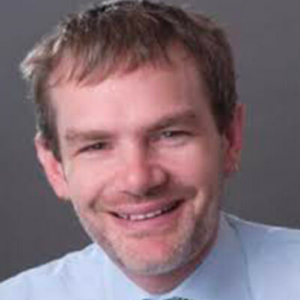 Aaron Dorfman (he/him) is Founder and Executive Director of A More Perfect Union: The Jewish Partnership for Democracy, an effort to mobilize the American Jewish community to strengthen American democracy. In its inaugural year, the organization focused on ensuring a free, fair, safe, and accessible 2022 midterm elections. Previously, Aaron served as President of Lippman Kanfer Foundation for Living Torah, Vice President for Programs of American Jewish World Service, and Director of Informal Education at Temple Isaiah of Contra Costa County. He holds a Master's in Public Policy from the Harvard Kennedy School and a BA in English and Political Science from the University of Wisconsin-Madison. Aaron and his wife Talia live in Brooklyn, New York, where they're raising three fierce feminist daughters and one bearded dragon.
 Sarah Levin (she/her) is the Executive Director of JIMENA: Jews Indigenous to the Middle East. At JIMENA, Sarah has conceptualized and developed a number of campaigns and projects for Mizrahi and Sephardic Jews to explore, preserve, protect and share their heritage, identities, and experiences. In partnership with a multitude of organizations and activists, Sarah is proud to continue leading domestic and international efforts to pursue acknowledgement, justice, and redress for Sephardic and Mizrahi Jews.
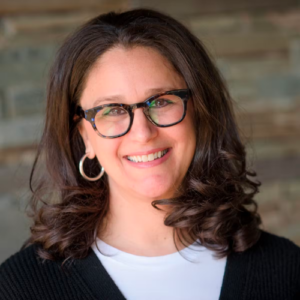 Stefanie Rhodes (she/her) is currently the CEO OF Slingshot. She has spent the last 18 years working in Jewish philanthropy including 9 years at the Jewish Funders Network, where she ran the Younger Funders programming and was the founding Director of the Foundation Professionals program. Prior to joining the Jewish professional world, she worked in ad agencies and tech start-ups in the Bay Area.
 Judith Rosenbaum (she/her) is CEO of the Jewish Women’s Archive, a pioneering digital archive that documents Jewish women’s stories, elevates their voices, and inspires them to be agents of change. She also served for a decade as the Director of Public History at JWA, and has devoted her career to creating a more inclusive, feminist history and harnessing history as a tool for social change.
 Chava Sims Shervington (she/her) is currently president of the board of the Jewish Mutilracial Network, where she became a recognized voice on issues of racial equity and inclusion in the Jewish community. She is also a founding member of Komchach, which is an organization that exists to support Black Orthodox Jews. A passionate and committed diversity advocate, prior to her work with JMN and Komchach, Chava organized regular programming for Jews of Color. Chava's widely respected contributions resulted in her becoming a regular speaker and writer on issues of diversity in Judaism, and she has appeared in the Chicago Tribute, JTA, and The Salon on the Jewish Channel. Her passion and dedication to the advancement of Jews of Color was further honored by her selection as the one of the awardees of Jewish Week's "36 under 36" and as a fellow in the Selah Leadership Program. Additionally, after her recent move to Los Angeles, she was recently honored by the City of Los Angeles as a Jewish woman creating change in LA. She has additional experience in effectively growing nonprofits, not only within the Jewish community, but through holding in-house council positions in New York and Pennsylvania where she gained expertise in human resources and corporate law. She holds a Juris Doctorate from The George Washington University Law School.
 Mordy Walfish (he/him) has served as Chief Operating Officer of Leading Edge since 2017, overseeing the operational growth of an organization dedicated to strengthening how Jewish nonprofits attract, develop, and retain top talent. Prior to joining Leading Edge, Mordy was Vice President for Programs at Repair the World. He is a Wexner Graduate Fellow, Schusterman Fellow, and the winner of the 2015 JPRO Network Young Professional Award. He serves on the boards of Jewish Queer Youth and Dimensions Educational Consulting and teaches courses in strategic management and leadership coaching. He is based in Brooklyn, New York.
Evaluation Criteria
The Grants Review Committee used the following criteria when evaluating applications:
Safety, Respect, and Equity
Organizations who value and center safety, respect, and equity in all parts of their organization, and can articulate how these values are held in the work.
Community or Field Need
Organizations that have experience within diverse Jewish communities, have listened to the community, and thus have identified a specific need within one or both of our focus areas (gender and/or safety, respect, equity for all) and believe that their initiative will play a part in filling that need.
Innovation
Proposals and organizations that have a unique, innovative, and responsive way of doing things and will bring new offerings to this work.
Multi-dimensional Lens
Organizations committed to understanding the unique and intersecting identities of their constituents; projects designed to address safety, respect or equity in a way that takes into account the intersecting identities of their constituents.
Viability
Member/Affiliate organizations that dream big but show strength in day-to-day implementation and have the capacity to effectively implement change efforts. Organizations with demonstrated viability for implementation and launch, as well as clear benchmarks for tangible over the two year time frame will be more competitive.
Demonstrated Expertise in the Field
Proposals from applicants with demonstrated success in field building efforts, and with existing staff that have the expertise to carry out the proposed project. We look for demonstrated, dedicated staff and board leadership who are committed to and invested in the proposed methodology of change, while demonstrating an openness to evaluation and change.
Impact
Proposals who demonstrate potential for impact through scale, scope, or scalability.
Sustainability
We are seeking proposals that demonstrate sustainability through either 1) a clear arc including sunsetting, or 2) a plan to continue the projected work past the proposed use of funds.
Measurement
Member/affiliate organizations who have identified how they will measure change; with clear and achievable short and long term goals.
Spring Grants Cycle Timeline
January 24, 2024
RFP Released
The RFP was released and SRE members and affiliates were invited to apply.
February 8, 2024
Grantseekers Workshop
The Grantseekers Workshop webinar was held on February 8, 2024.
March 8, 2024
Letters of Intent Due
Application deadline.
May 2024
Grant Committee Interviews
The Grants Review Committee held interviews with round #2 applicants. Those not moving to round #2 were notified.
Early June 2024
Final Round Notifications
Organizations in the final round were notified if their grant proposals were accepted.
Late June 2024
Document Collection
Final documents were collected for grantees.
July 2024
Grant Agreements Signed
Grant agreements were signed and disbursed.
For more information, see our 2024 Spring Grants FAQs.
Please reach out to info@srenetwork.org with any questions.